Portable appliance testing, usually called PAT testing, is one of the most misunderstood parts of workplace electrical safety. Some businesses test everything every year whether it needs it or not, while others have not tested anything for years. Here is what the law actually requires, and how to set a sensible schedule.
What the Law Says
There is no law that says portable appliances must be tested every year. The Electricity at Work Regulations 1989 require electrical equipment that could cause danger to be maintained so that it is safe, and the Provision and Use of Work Equipment Regulations 1998 require work equipment to be suitable and kept in good repair.
PAT testing is simply the most practical way of showing that you are meeting those duties. A clear record of inspections and tests is also what your insurer, or the Health and Safety Executive (HSE), would expect to see if an incident ever occurred.
How Often Should Equipment Be Tested?
The right frequency depends on the type of equipment and where it is used. Guidance from the HSE and the IET recommends a risk based approach:
- Offices, shops and hotels: equipment that rarely moves, such as desktop computers and printers, needs less frequent formal testing than equipment that is handled every day.
- Factories and workshops: power tools and equipment used in harsh conditions need checking much more often.
- Construction sites: 110V tools and leads can be damaged quickly and need regular inspection, often every few months.
- Hired or public use equipment: usually needs checking before each hire or use.
Every item should also be checked over by the person using it before use. Most faults, such as damaged cables, cracked plugs and scorch marks, can be spotted by eye.
The Three Levels of Checking
A good PAT programme combines three levels of check:
- User checks: a quick look over the equipment before it is used.
- Formal visual inspections: a more thorough inspection by a trained person, including inside the plug where appropriate.
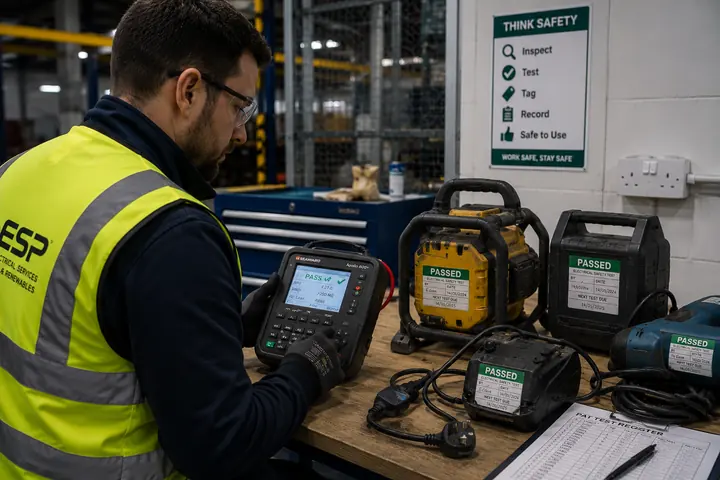
- Combined inspection and testing: electrical tests such as earth continuity and insulation resistance, carried out with specialist test equipment.
Class I appliances, which rely on an earth connection for safety, generally need testing more often than double insulated Class II equipment.
What You Receive
When we carry out PAT testing, every item is labelled and recorded in an asset register showing its location, test date, result and when the next test is due. Any equipment that fails is clearly marked and reported, so it can be repaired or taken out of use.
Keeping It Simple
We fit PAT testing around your working day and can combine it with fixed wire testing, emergency lighting checks or thermal imaging, giving you one contractor and one set of records for your electrical compliance. Find out more about our PAT testing service.
Frequently Asked Questions
Is PAT testing a legal requirement?
There is no specific law requiring PAT testing, but you do have a legal duty to maintain electrical equipment so that it is safe. Regular inspection and testing is the most practical way to show you are meeting that duty.
Do new appliances need testing?
New equipment should be free from faults, so a visual check before it goes into use is usually enough. Add it to your asset register so it is included in your next round of inspections.
Need your equipment tested, or a testing schedule set up? Contact Econ Electrical to discuss your requirements.