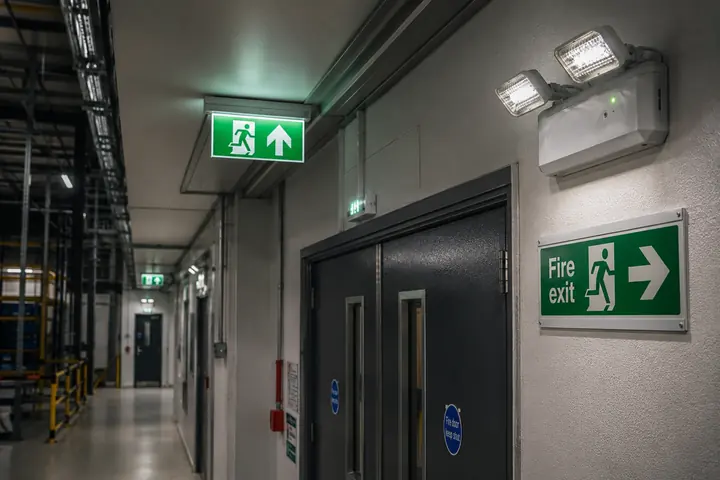
Emergency lighting is one of those systems you hope never to need. When the power fails, it guides staff and visitors safely out of the building, lights up hazards and helps people find firefighting equipment. Because it sits unnoticed for most of its life, it is also one of the systems most likely to be neglected.
Your Legal Duties
In England and Wales, the Regulatory Reform (Fire Safety) Order 2005 places duties on the responsible person for a building, usually the employer, owner or managing agent. Where escape routes and exits need lighting, emergency lighting must be provided, and it must be kept in good working order.
Your fire risk assessment should identify where emergency lighting is needed. BS 5266, the British Standard code of practice for emergency lighting, sets out how systems should be designed, installed, tested and maintained.
The Tests You Need to Carry Out
- Monthly: a short functional test of every emergency light and exit sign, simulating a mains failure to check that each one switches over to battery power.
- Annually: a full duration test, where the system runs on battery for its full rated duration, usually three hours in commercial premises. This shows whether the batteries can still do their job.
Every test, fault and repair should be recorded in an emergency lighting log book. If the fire service or your insurer asks for evidence of maintenance, the log book is what they will want to see.
After a full duration test, batteries can take up to 24 hours to recharge. We usually test alternate fittings or test at the end of the working day, so the building is never left without cover.
The Faults We Find Most Often
When we inspect emergency lighting in commercial and industrial buildings, the same problems come up again and again:
- Failed batteries: units that pass a quick monthly test can still fail long before the end of a full duration test.
- Gaps in coverage: new partitions, mezzanines or racking can leave escape routes in shadow when the original layout no longer matches the building.
- Damaged or missing fittings: fittings knocked by forklifts, painted over or removed during a refurbishment.
- Ageing fluorescent fittings: older units are harder to repair and use more energy than modern LED emergency lights.
- Missing records: tests may have been carried out, but without a log book there is no way of proving it.
Upgrading Your System
If your emergency lighting is ageing, upgrading to LED fittings can reduce maintenance and improve reliability. Self test fittings and automatic test systems carry out routine tests for you and flag faults straight away, which is especially useful across large sites or multiple buildings.
How We Can Help
We provide emergency lighting design, installation, testing and maintenance for commercial and industrial premises. We can take care of your monthly and annual tests, keep your records up to date and put right any faults we find. Find out more about our emergency lighting services.
Frequently Asked Questions
Who can carry out the monthly emergency lighting test?
A competent person on site can carry out the monthly functional test once they have been shown how. Many businesses ask us to do it as part of a maintenance contract, so testing and records are always up to date.
How long should emergency lighting last in a power cut?
Most commercial premises need three hours. The duration required for your building should be set by its fire risk assessment and design, in line with BS 5266.
Is your emergency lighting up to standard? Contact Econ Electrical to book an inspection or discuss a testing contract.