Electric vans and company cars are now a common sight on business car parks across Yorkshire, and more staff are driving to work in electric vehicles. Installing charge points can support your fleet, help you attract and keep employees and move you closer to your sustainability targets. But a commercial EV charging installation needs far more planning than fixing a few chargers to a wall.
Who Will Use the Chargers?
The right solution depends on who is charging and for how long:
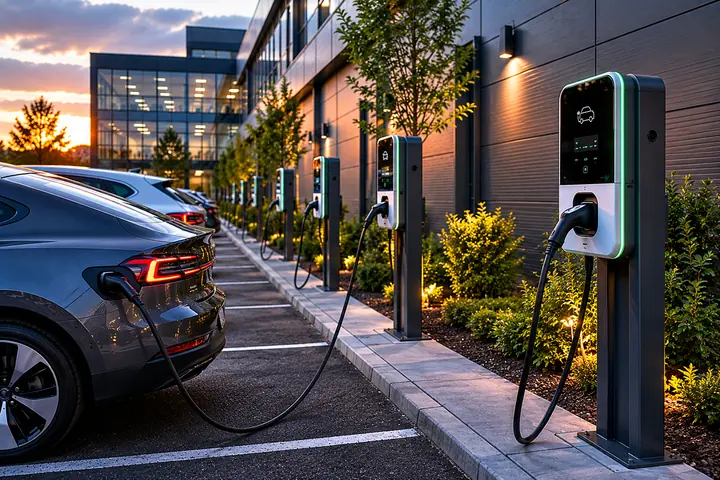
- Staff charging: cars parked for a full working day can charge slowly, so 7kW chargers are usually enough.
- Fleet charging: vans returning to base overnight can also use AC chargers, but fleets that need a quick turnaround may need 22kW AC or rapid DC chargers.
- Visitor and customer charging: shorter stays suit faster charging, and you may want payment or access control.
Thinking this through early avoids paying for capacity you do not need, or installing chargers that cannot keep up.
Check the Supply Before Choosing Chargers
A single 7kW charger draws about as much power as two or three kettles, for hours at a time. Ten of them can easily use up the spare capacity of a typical commercial supply. Before recommending any equipment, we look at your maximum demand and the capacity of your incoming supply.
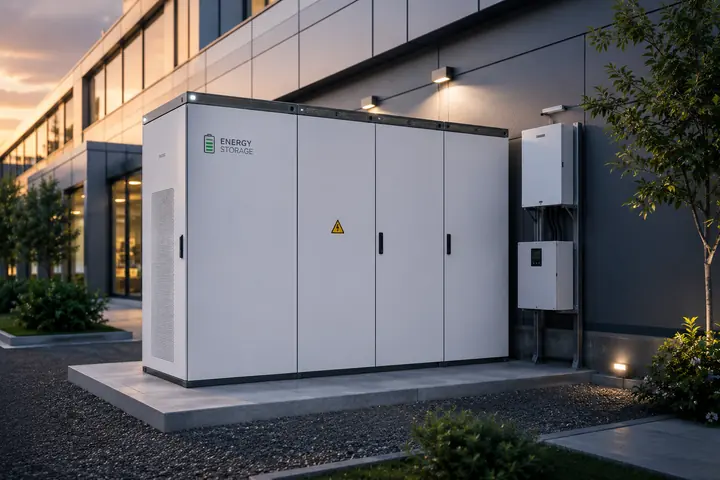
Where capacity is limited, load management lets chargers share the available power, slowing down when the building is busy and speeding up when demand drops. It is often far cheaper than upgrading the supply. Where an upgrade is needed, we deal with the Distribution Network Operator on your behalf.
Earthing and Safety
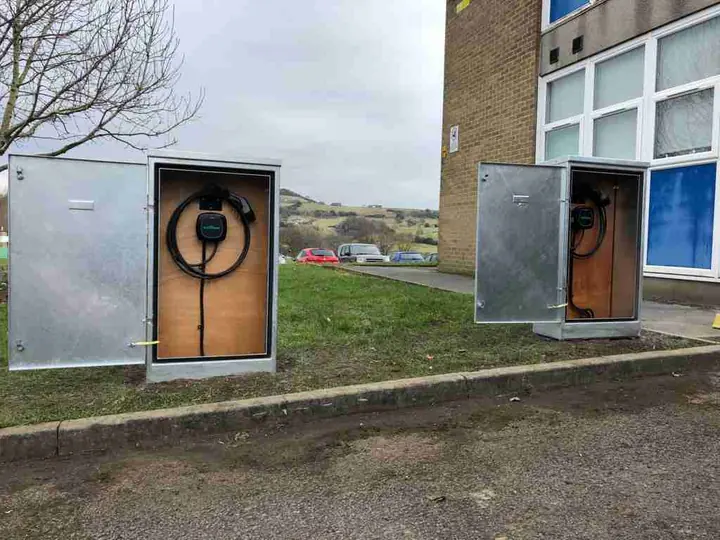
EV charging installations must meet the specific requirements of BS 7671 for electric vehicle charging, and earthing is one of the most important. Many commercial buildings have a PME earthing arrangement, which is generally not suitable for an outdoor charge point unless additional protection is provided. Typical solutions include an earth electrode creating a TT system for the chargers, or chargers with built in protection against open PEN faults.
On our EV installation at a council car park in Wakefield, the chargers were installed on a TT system with surge protection.
Smart Chargers and Regulations
Charge points for workplace and fleet use generally need to meet the GB smart charge point regulations, so we install compliant units from established manufacturers. Smart chargers also let you monitor usage, control who can charge and, if you choose, pass the cost of electricity on to drivers.
For new non residential buildings in England with more than 10 parking spaces, the Building Regulations (Approved Document S) require at least one charge point plus cable routes for around one in five spaces, and major renovations can trigger similar requirements.
Plan for Growth
Most businesses start with a handful of chargers and add more as their fleet grows. Installing ducting, containment and a suitably sized supply at the start makes future expansion quicker and far less disruptive. Groundworks are often one of the largest costs of an EV project, so it pays to do them once.
Funding
Government grant schemes have supported workplace charging in recent years, and the funding on offer changes over time. When we survey your site, we will check what is currently available for your business.
Why Choose Econ Electrical?
We design and install EV charging for commercial, industrial and public sector clients across Yorkshire and the UK, managing everything from the survey and design to installation, commissioning and ongoing support. Find out more about our commercial EV charging installation service.
Frequently Asked Questions
How long does a workplace charger installation take?
A small installation on a site with spare capacity can often be completed in a day or two. Larger projects involving groundworks, supply upgrades or many chargers take longer, and we agree a programme with you at the start.
Do we need permission from the network operator?
Larger installations may need to be notified to, or approved by, the Distribution Network Operator. We check this during the survey and manage the application for you.
Planning EV charging for your staff or fleet? Contact Econ Electrical to arrange a site survey.